Why Bitcoin Is Pseudonymous, Not Anonymous
Bitcoin addresses do not carry your name, but every transaction between them is public and permanent. Once a single address is tied to you — through an exchange account, an invoice or a delivery address — analysts can follow the coins forward and backward through the ledger. Specialised blockchain analysis firms do this at scale, clustering addresses that are likely controlled by the same person.
That is why privacy-conscious users turn to bitcoin mixers. Mixing does not make Bitcoin anonymous by itself; it adds a deliberate break in the chain so that the trail stops being obvious.
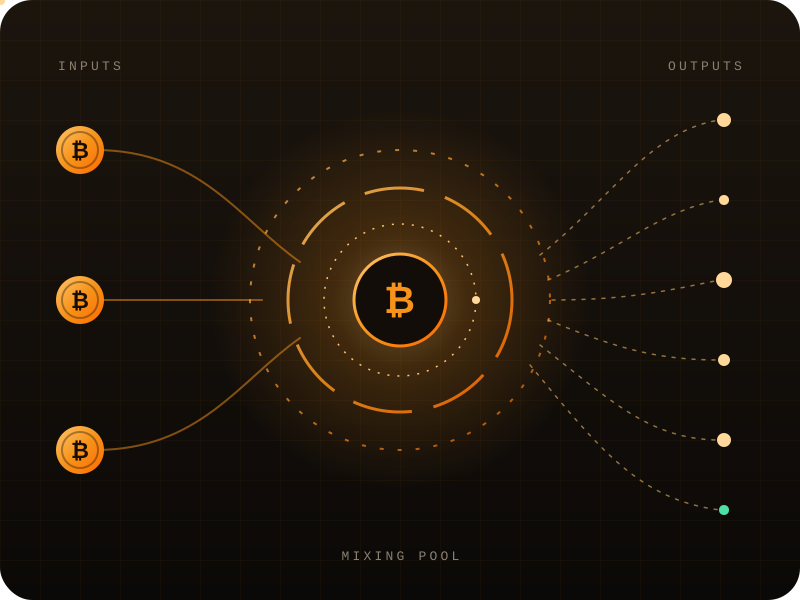
The Mixing Process Step by Step
A typical custodial service follows four stages. Details vary between services, but the logic is the same.
Order and deposit address
You choose output addresses, a fee level and an optional delay. The service generates a one-time deposit address and, on good services, a signed letter of guarantee for the order.
Pooling
Your deposit joins a reserve of coins from many other users and from the service’s own liquidity. From this moment the coins you sent are no longer the coins you will receive.
Delay and split
The amount is divided between your output addresses and released after randomised delays, which makes it harder to match deposits to payouts by timing or exact value.
Payout and log deletion
Fresh coins arrive at your addresses minus the fee. A trustworthy operator then deletes the order data on a published schedule.
Custodial Mixers vs CoinJoin
With a custodial mixer (often called a bitcoin tumbler), you hand your coins to a service for a short time and trust it to pay you back and forget you. It is simple and flexible, but the operator could keep logs or disappear with deposits.
CoinJoin takes a different route. Many users build one large transaction together, each contributing inputs and receiving equal-sized outputs. A coordinator organises the round, but it never controls your keys, so it cannot steal funds. The trade-off is more technical setup, on-chain fees and the need to wait for enough participants.
What Is a Letter of Guarantee?
A letter of guarantee is a message signed with the operator’s public key that confirms your deposit address, amount and terms. If something goes wrong, it is your proof that the order was genuine. Before sending funds, verify the signature against the key published on the service’s official site — phishing clones often fake this step. Save the letter until the order is fully paid out.
What Bitcoin Mixers Cannot Do
No service offers perfect anonymity. A small anonymity set, unusual amounts or careless reuse of addresses after mixing can all weaken the result. Custodial services also see your order while it is active. Most importantly, mixing does nothing to change the legal status of funds: privacy tools are meant to protect lawful financial information, not to hide crime. Read our guide to choosing a safe bitcoin mixer before you start.
Glossary
- Bitcoin tumbler
- Another name for a bitcoin mixer.
- Anonymity set
- How many possible owners a given output could belong to.
- Output address
- A fresh address where mixed coins are delivered.
- Clustering
- Grouping addresses that are likely owned by one person.